Tuesday, July 12, 2016

Foreclosures and Student Debt

An idea I had when running for NJ State Assembly was to help graduates carrying college debt and help them purchase a foreclosed home. It would help or eliminate the student loan, generate tax revenue, reduce the glut of foreclosures, and help stabilize the prices of existing homes.

There is a problem with foreclosures in New Jersey, and a problem with students who are struggling to pay them off and purchase a home. Perhaps there is a way to resolve both situations and turn it into a positive for New Jersey. I would look at this as a win-win for the graduates and the housing foreclosure market.

As an example, if a foreclosed home that was worth $450000 is now valued at $200,000 and a college graduate has a debt of $100,000, perhaps combining the two into a $300,000 mortgage. Most banks would look at the student debt as an obligation against qualifying for a mortgage loan.

However, the student could only qualify for a foreclosed home, not a new home or typical mortgage. This would possibly help eliminate empty homes in foreclosure, help stabilize home prices and give a graduate the opportunity to own a home. By using this method, they would be able to pay down both loans at the same time.

By the time many students pay off their loan and qualify for a home, their kids would be going to college.

If the student defaults on the mortgage, it would not eliminate their student debt. Perhaps it could be set up where a percentage of the mortgage goes toward the principle of the student’s debt. Another possible option would be able to pay off the $100,000 student loan and carry a $300,000 mortgage.

If the college graduate can show some kind of collateral or promise of a job in a certain field...such as a doctor, a lawyer, engineer, etc . . . . a certain income level, it would be much better to have a family in the house than for it to stay empty in the foreclosure process.

They would not be entitled to any discounts or incentives, and would still have to meet the same requirements that any other home buyer would qualify under. There would be no student loan debt forgiveness.

I have heard that some banks are thinking of selling their foreclosures to investors who would rent them out. That would hurt neighborhoods substantially, as the investors really do not care about the neighborhoods and are only looking to receive a monthly income. Perhaps an idea like this would help prevent that from happening.

Countless foreclosed homes are being stripped of their copper pipes etc. while they sit empty, or taken over by those that do not belong there. Numerous homes are bought in NJ by investors, who live out of the state and then rented out, and as long as the rent is paid they investors don’t really care who lives in them. Perhaps this could be a win-win for everyone. Many banks do not want to keep the growing list of foreclosures and are thinking of selling them off to investors who have no interest in the neighborhood other than monetary gain.This may not be a perfect plan, but I haven’t seen any other solutions or ideas. This could be a starting point to help resolve the foreclosure and student debt issue. Moreover, perhaps an even bigger plus it would keep graduates from leaving the state and losing another valuable asset.

A tax ratable for the state!

This is what I call innovative thinking and perhaps putting New Jersey back on the map.
I realize one is a Federal loan and the other is a state loan, but there must be a way this can be worked out to benefit all.

Instead of taxing people to no end, let’s start thinking outside the box on bringing revenue into the state coffers.


Thursday, June 23, 2016

HOODWINKED and BAMBOOZLED

State Democrats have advanced on a $35.3 billion state budget with two tax increases that would more than double the money for government workers' pensions next year . . . by raising income taxes on millionaires and corporation business taxes.
Since 1996, governors from both parties have been underfunding the system and using it to balance the budget.
In 2006, the sales tax increased from 6% to 7% and was to generate $1.2 billion in revenue. Under the Corporation Business Tax, a 4 percent surcharge had been placed on what businesses owe to help generate an additional $100 million for New Jersey.
New Jersey’s property taxes in 2010 had increased by more than 70 percent from the previous 10 years.
Between 2003 and 2010 there were 115 tax increases and that still didn’t generate enough revenue.
In 1997, the energy surcharge fee was created, was to have been phased out but was kept to generate $53.5 million for the state in 2006, and to this day, it is still in effect.
Did you know that as a New Jersey resident a portion of your utility bill pays for state facility utilities and energy costs at New Jersey Transit?
The New Jersey Office of Legislative Service projected that for typical residential customers, for each household that surcharge runs about $73 a year on their electricity bill and about $89 annually on their gas bill. New Jersey’s proposed budget for 2017 includes a reallocation of $112 million from the Clean Energy Fund to pay for several of New Jersey government’s utility bills . . . A portion of your utility bill goes towards balancing the state budget!
More often than not, NJ government mismanages our money and then pushes the consequences of their actions back onto the taxpayers. I didn’t bankrupt the pension fund, I didn’t bankrupt the state’s transportation fund . . . but all we hear is how we must tighten our belts and dig deeper to fix their errors.
Now, New Jersey Democrats want raise the gas tax to fund the Transportation Trust Fund, once again placing the burden on its citizens. Already we are being lied to. The gas tax was supposed to have been 'only' 23 cents and that is not the case. The public was not told of all the hidden add-ins built into the bill.
The states drivers will be paying close to 40 cents per gallon or more, it is not a fixed tax and will increase as gas prices escalate. Not one of our representatives have said it would be a dedicated fund to be used only for infrastructure costs.
Another tax that will escalate . . . if one refinery goes dark, that tax will rise faster than the morning sun.
We, as the people of this state already paid for the TTF . . . misused and mismanaged we are being asked to fund it a second time with no guarantees that it will not be used to balance another shortfall somewhere else.
Unless we hold our elected leaders responsible for their actions . . . leaders supposedly elected to look out for our interests, we will continue to roast ourselves over a self-perpetuating fire pit.
The more money government collects . . . it will find a way to spend it, creating more of the same mess it claims it is trying to fix. Any money they do collect goes towards paying off the bonds from the prior year. The shell game is in play; we are being hoodwinked and bamboozled at what cost?
I for one am tired of having my pockets siphoned to fill the states endless money grab at my expense while paying for their self-interests at the same time.

Saturday, November 21, 2015

Taking Care of Our Own First

We can’t take care of our own and we wonder why we pay higher taxes, go deeper in debt, continue to fund what we can’t afford, and have no money left to fund our own humanitarian problems.
The US government has an Emergency Refugee and Migration Assistance (ERMA) account is funded at a ceiling of $100 million, set up to fund the initial 30-90 days of refugee resettlement in the United States.
The U.S. takes more than twice as many refugees as all countries from the rest of the industrialized world combined.
10,000 additional Syrian refugees would cost U.S. taxpayers $130 million per year. Over the next 50 years the costs for these additional refugees would add up to $6.5 billion for American taxpayers.
This $6.5 billion expense to provide these refugees with community services, health, education, welfare and retirement benefits would be in addition to to the almost $13.5 billion in foreign aid that U.S. taxpayers have already sent to the Middle Eastern nations to help with the Syrian civil war conflict.
Of the major refugee resettlement organizations in the US; many are run by former refugees.
Staff and management of the hundreds of taxpayer supported U.S. contractors are largely refugees or immigrants whose purpose is to gain entry for more refugees.
Refugee agencies refuse to use their own resources to maintain the U.S. refugee resettlement program. Public money has thoroughly driven out private money.
Welfare use is staggering among refugees and is never counted by officials as part of the cost of the program. Yet, when it is included, the total cost of the refugee program soars to at least 10-20 billion a year.
Refugees are not tested for many diseases, such as HIV. Refugees are a major contributing factor to TB rates among the foreign-born. TB among the foreign-born now accounts for about half of the TB in America.
The money the U.S. spends bringing one refugee to the U.S. could have helped 500 individuals overseas in countries where they currently reside.
In the U.S. 47% of loans made to refugees for transportation to the U.S. are unpaid leaving an unpaid balance of $450 million, and does not include interest or an unknown amount that has been written off.
Refugee resettlement is profitable to the organizations involved in it. They receive money from the federal government for each refugee they bring over. They have almost no real responsibilities for these refugees. After 4 months the “sponsoring” organization is not even required to know where the refugee lives.
A refugee legally resides in the country of resettlement and is eligible for federally funded cash assistance for up to 8 months.
Refugees arriving in the United States will receive $900 when they first arrive.
Refugees who are able to quickly enter the job market can elect to participate in the Match program, a federal program for refugees geared towards employment and self-sufficiency. The Match program provides families with money for rent and basic living expenses for three months. Adults are provided $325 each/month for the three month program, and children are provided $200 each/month for the three months.
The refugee program has a significant impact on U.S. foreign policy. It also affects internal and foreign policies of other nations by allowing them to rid themselves of unwanted minorities or close their borders to asylum seekers in the knowledge that the U.S. will take them in.
More than 500,000 people . . . a quarter of them children, were homeless in the United States this year. Approximately 15.3 million children are starving in US households.
As of 2012, 1,151,890 people live in food-insecure households in New Jersey alone
.In 2014, 77 percent of food-insecure households in New Jersey reported having to choose between paying for food, paying for utilities or heating fuel.
The state of New Jersey had the biggest increase in the number of residents participating in the Supplemental Nutrition Assistance Program—up 19 percent since June 2010.
The homeless during 2013, according to the Corporation for Supportive Housing. estimated a total of 25,612 people to be homeless in New Jersey.
New Jersey’s homeless population increased 16 percent in 2014.
Let’s take care of them first before we worry about taking care of someone else.http://savejersey.com/2015/11/syria-refugee-new-jersey/

Wednesday, October 1, 2014

The History of New Jersey’s Transportation (Mis)trust Fund

Did you know that New Jersey has $900 million a year going to pay off interest and principal on bonds issued years ago? The issuance of new bonds, not tax revenue, is funding the Trust Fund’s contribution to the Transportation Capital Plan.
Every year, the Transportation Trust Fund spends almost three times as much as it raises in taxes. Every time that the Trust Fund borrows $1.6 billion, it commits to paying $100 million a year for 30 years in debt payments (assuming a 5% interest rate).

Since 2005, the Trust Fund’s annual debt payments have escalated by over 56%, from $623 million to $845 million.
Did you know that starting around the middle of 2011, the entire $895 million that taxpayers contributed to the Trust Fund every year to pay for transportation projects will instead go to pay off the debt on previously issued bonds?
The Transportation Trust Fund was created by the Legislature in 1984. Its primary financing mechanism was designed to be a pay-as-you-go system. It was also supposed to prohibit the use of Trust Fund money for routine operations and maintenance.
Over the last 25 years, the focus of the Trust Fund as a funding mechanism for the DOT shifted from primarily pay-as-you-go financing to a heavy reliance at first with short-term 10-year bonds, graduating to 20-year long-term bonds, and then escalating to 30-year.
Trust Fund monies originally intended to support capital improvements have been used, instead, to fund maintenance costs once considered part of the operating budget paid for out of the state’s general fund.
In fact, the Trust Fund’s overall annual spending in Capital Program contributions and debt service payments have grown more than twice as quickly as the tax and fee revenues dedicated to the Trust Fund. The bonds issued to cover the gaps commit the Trust Fund to higher annual debt payments, further increasing the Trust Fund’s expenses.

Existing tax revenue to the Trust Fund is enough to cover only debt service payments; any new capital program costs must be met with new sources of revenue.
But if new taxes are only going to fund the refinancing and payments towards borrowed interest of the Trust Fund’s existing debt, I find that totally unacceptable.
Our legislature caused its own problems through mismanagement, the diversion of funds for unintended use and, ironically, by not following their own guidelines. Maybe the revenue generated from Red Light camera fiasco should go towards funding the Trust Fund dilemma?
Increasing the New Jersey gas tax will add about .45 per gallon of fuel. Why should New Jersey drivers compensate for the incompetence of our legislature? There is no guarantee that after leaving 1,000 miles of bad road behind us, we will only find ourselves right back on the same wrong-way highway in the not too distant future.
 

Saturday, September 27, 2014

The Contradiction-in-Chief

President Obama is now back tracking saying you can keep your health plan. Well that’s nice, but just how do you do that after you received your cancellation notice?

Echoing his friend Frank “Monkey Court” Pallone‘s talking points, Obama also says most people won’t want to, anyway, and that anyone who’s had an individual policy canceled to look at what’s available at HealthCare.gov before they look to reinstate their old policy.

This guy is a walking book of contradictions!

Roughly 85% of Americans have insurance. Out of a population of approximately 317 million, about 11 million people have policies on the individual market.

Out of that 11 million, at least 4.2 million Americans have been sent cancellation notices by their insurers. People who were kicked off of a plan they liked and could afford are now facing higher premiums and deductibles.


Insurance companies and commissioners across the country now face the daunting task of deciding how they are going to handle already-cancelled health-care policies under the President’s new administrative ‘fix’ for the Affordable Care Act.

By reinstating cancelled policies, these insurance companies will need to issue coverage that doesn’t meet Affordable Care Act standards.

And it’s not so easy for an insurance company to reinstate a policy; insurance companies need to plan premiums and budget for expenses far in advance of issuing a policy.

Changing the rules after health plans have already met the requirements of the new law could destabilize the market and result in even higher premiums for consumers. Our central plannes overlook the fact that premiums have already been set for next year based on an assumption that consumers will be transitioning to the new marketplace.

Each state has  regulations of its own with which a plan needs to comply before it can be offered, including New Jersey. Many of those canceled plans no longer meet state regulations; even ones that do comply would need to be approved by the responsible state agency and with less than two months to go in the calendar year, it won’t happen.

It’s almost the New Year and a quick fix for this mess won’t be that swift. The insurance companies better have all hands on deck to prepare for this administration’s 2014 mid-term, because if this so-called temporary fix doesn’t work, God knows what our walking, talking, Contradiction-in-Chief will try next to save his congressional allies’ skins.

The Unemployed States of America

President Barack Obama has achieved the dubious distinction of being a sitting president with the highest unemployment rate ever,

We take him at his word that he loves the poor (we know this because he has created so many of them).

Humor aside, the only things booming in this country under Obamanomics are poverty and health insurance premium rates.

The history behind this sad pass is pretty clear…


Save Jersey has tracked the building unemployment and underemployment disaster for years now. We’ve never seen anything like it in U.S. History.

President Ronald Reagan suffered a severe recession starting in 1981, but all the job losses of that recession were recovered after 28 months. Reagan’s recovery was fueled by traditional pro-growth policies.

Under Obama, by April, 2013, a full 64 months after the prior jobs peak or almost 5½ years later, we still had not recovered all of the recession’s job losses.

By contrast, during the Reagan recovery, 64 months after the recession started, the raw number of jobs grew to a level 9.5% higher than where it stood before the recession started representing an increase of about 10 million more jobs.

In April, 2013, jobs in the Obama recovery were still about 2% below where they were when the recession started, about 2 ½ million less, or a shortfall of about 10 million jobs.

Even former president Jimmy Carter produced 4 times as much economic growth during his one term as Obama did during his entire first term . . . yikes! It’s pretty bad when a peanut farmer from Georgia is “happier than a pig on an acorn” having been surpassed for the title of worst president in our lifetime. But that’s where we’re at today, folks.

Legislative “Shared Sacrifice”


Each member of Congress “earns” 3.4 times more than the average American worker.

Congress also receives the equivalent of $14,000 in paid time off… assuming they only take half of the time off as the average federal employee. Taxpayers contribute about $6,000 to each Member of Congress’s health and life insurance and another $9,000 to the employer’s share of Social Security and Medicare taxes.

How much work did they do for it? Congress was in session just 126 days this year. They worked just two days in the month of August.

Congressional members average $3,346 per week, and their compensation including benefits totals around $285,000 per year. Unlike state and local government employees, who generally must contribute around 6 percent of their pay to defined benefit pensions, Members of Congress contribute only 1.3 percent of their salaries.

Members of Congress receive contributions toward retirement benefits equal to around 47 percent of their annual salaries, or about $82,000.

The number of laws passed by Congress last year was fewer than at any point since 1947.

Again, the current 2013 Congressional calendar consists of only 126 days. This left members of Congress with 239 “vacation days” to… perhaps… tour our great nation? Or mull over the idea of running for even higher office, or maybe visit a natural disaster or two to get some camera time. We know they weren’t visiting national parks because they closed them down.

Politicians like to say we should increase the retirement age to 70, as people are living longer.
If they actually worked, they might realize 66 is sufficient for most of the work force, as our legislative body works on average 2.3 days per week.

The “average” federal employee salary is $78,500. The median household income for most in the United States today is $50,875.

Federal workers receive health insurance, retirement health benefits, a pension plan with inflation protection, and a retirement savings plan with a government match. They typically receive generous holiday and vacation schedules, flexible work hours, training options, incentive awards, generous disability benefits, and union protections.

Taxpayers could save $39 million a year if members of Congress decreased their salary to $100,000 per year (still nearly twice as large as the average American worker’s salary of $50,875).

Our legislative leaders say they feel our pain; so exactly what is this “shared sacrifice” the people keep hearing about?

Elections Need to Matter Before the #Shutdown

It is a shame that we the people of the United States of America, the greatest country in the world, has legislators on both sides of the aisle (and let’s not forget about our president, too) who seem unable to reach an agreement and find a way to ease the pain that many Americans are feeling due to these antics.
They’ll continue to feel them for many months and possibly years to come.
While our government shuts down, federal legislators will continue to collect a substantial salary along with their many perks, millions of Americans are out of work and lacking benefits. Many folks who are still trying to recover from the recession or a natural disaster will now have to suffer even longer as government assistance remains hold.

This is not a game of cards where one can bluff and see who has the better hand with no regard to the repercussions that will be inflicted upon the American public. The lives of individuals and families are something the government seems to want to gamble with in order to prove who holds the winning hand between them.
Our economy was recovering, however anemically, even with the lower paying jobs that were being created. The housing market seemed like it was stabilizing, too, but these gains may all disappear and we may find ourselves back in another hole. The dollar becomes weaker every day the federal government is closed, the yen and euro become stronger, and the markets drop faster than a rock without a parachute. If we lose our current credit rating, the dollar will be worth nothing and it will take years to recover… if at all.
Congress is hardly the only problem. We have a president who is already planning a trip to Asia, probably bringing his kin along for the taxpayer-financed ride, all at an astronomical cost while our military is looking for food as the commissaries are empty, having to go elsewhere and paying upwards of 30% or more to feed their families on or off base.
It seems the priorities of our elected officials are their egos, something that they view as more important than the constituents whom they’re supposed to represent. It is a shame that as much as the American people are getting a bad hand in this shutdown poker game, they will nevertheless elect the same bunch of bureaucrats that engendered this predicament.
Unless we, as voters, clean house to show the world how tired we’ve become of the two major parties’ antics, the games will continue and we will continue on a course destined to negatively redefine our futures and, in the process, permanently changing the face of America.

The Sequester’s True Cost

“Instead of reducing our deficits with a scalpel to get rid of programs we don’t need but keep vital investments that we do – you know, this same group has kept in place this meat cleaver called the sequester that is just slashing all kinds of important investments in education and research and our military.”  ~  President Barack Obama blaming Republican’s for the sequester

When the sequester began
, our President flew to 32 destinations aboard Air Force One, and only seven of the 32 destinations were directly related to politics.

It’s a pattern worth revising as politicians debate a government shutdown.

The flight from Andrews Air Force Base to Chattanooga, TN and back cost taxpayers $449,375 just so Obama could give a speech blaming the Republicans for it.

A flight Obama took on March 15th to give a speech on energy policy and again on May 29th for a Democratic party fundraiser cost $254,526 for a one way, one hour and twenty-five minute-long. A two-hour flight from Andrews Air Force Base to Miami on March 29th to give a speech on the topic of infrastructure was $359,500.

The government shutdown and the amount of money saved by canceling public tours of the White House was less than the cost of one of Obama’s vacations.

The Obama administration blamed the halting of the White House tours on the spending reductions mandated by sequestration and saved about $74,000 per week or close to $2 million over the year.

What you haven’t likely heard is the fact that those savings were roughly half the cost of Obama’s Christmas vacation to Hawaii last year. Documented by the ‘Hawaii Reporter,’ it was estimated the total cost of that trip was “at least $4 million,” the true cost could be nearly five times that. It does not include the cost of flying advance teams out to Hawaii and the separate Michelle flights she took in 2010 and 2011, with Obama catching up later. Estimates of the total cost for the four Hawaii vacations the Obama’s have taken during Christmastime 2009-2012 cost taxpayers in excess of $20 million.

Obama had returned from Hawaii to complete a deal on the Fiscal Cliff and then jetted back to Honolulu, adding an additional $3.24 million to the tab, bringing the cost of the 2012-1013 vacation to well over $7 million.

In 2011, Obama spent eleven days at a $50,000-per-week beachfront rental property with the cost of that trip to taxpayers reaching into the “millions.”

Obama’s golf outing with Tiger Woods cost the taxpayers “over a million dollars,” enough money to save 341 federal workers from a furlough.

The sequestration forced the Secret Service to cut $84 million from its budget.

The Obama’s African tour was estimated to have cost $100 million . . . $100 million that would fund 1,351 weeks or 26 years of White House tours.

During the months of the sequester, Obama took 10 flights aboard Air Force One during June, the most of any month. He took four trips in the months of March, April and August and five trips in the months of May and July. Travel that included trips through the Middle East, Central America, Europe and Africa.

A study by the National Taxpayers Union concluded “[w]ith four trips abroad over 18 days through the first six months of 2013, Obama is on pace to set the record for the most travel in a fifth year in office, if that precedent continues, he will be among the most-traveled U.S. chief executives in history by the time he leaves office.”

Millions of hardworking Americans are looking for jobs, struggling to pay their mortgages and make ends meet, all while Obama claims to care about the middle class as they continue to foot the bill.

A Weiner Across the Board

by Joe Sinagra
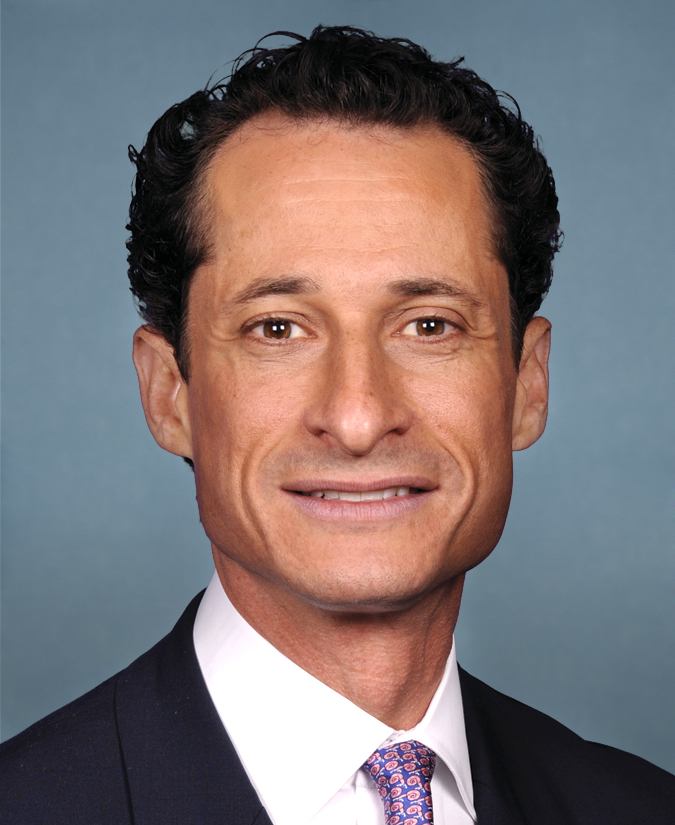
As Anthony Weiner’s self-induced trials and tribulations continue to consume media attention, we’re already starting to see something which we should’ve expected: attempts to make it seem as if Weiner isn’t a weener outside of his regrettable sexting habit.

In reality, Weiner’s congressional record shows him to be a legislator who liked calling press conferences and introducing bills but rarely followed through and achieved results for his constituents. He often succeeded only in acting like a embarrassing fool.

The only bill he wrote and sponsored that did become law involved reducing cigarette sales-tax evasion, a move which happened to benefit a major donor and family friend who worked as a cigarette distributor. And on a personal level…?

A few examples from NY Mag and the Gothamist:
- In 2005, he became so irritated with a staff member that he allegedly threw a salad against the wall, then left the room as the dressing slowly dripped, leaving a stain.

- In the midst of an argument with an aide, Mr. Weiner reportedly threw his BlackBerry against a wall, and then had the gall to blame the aide for the broken phone.
- Weiner once had aides call air-traffic control in an attempt to have his plane moved up in the departure order.
Many Democrats have been reported as saying his unwillingness to be a team player affected his ability to be an effective congressman. Even those who worked alongside him believed him to be a lawmaker with little patience for crafting legislation and possessing a single-minded focus on generating attention so he could run for mayor of New York.

Talk about role models, hell . . . if the liberals saw nothing wrong with Ted Kennedy leaving a woman underwater while going home to sleep and remain in the Senate for 46 years, Weiner could be a shoo in.

The media even says he is a ‘stand up’ guy. Not by any objective criteria of which I'm aware,

A Profitable Failure for Someone

Let’s see now,

The federal government hires a Canadian contractor for hundreds of millions of dollars to design the Healthcare.gov web page. CGI Federal secured a contract worth a total of $93.7 million, with a base value at $55.7 million. The company reportedly has been paid nearly $200 million to date, with the potential value of the contract reaching $292 million.

The multi-million dollar site crashes the first day out; now Obama hires the ‘best and brightest’ techies to fix what should have been fixed from the beginning. Where were the best and the brightest when they were building it?

Then Obama blames the crash on an overload because so many people were signing up.

My question: how do we, the taxpayers, get our money back, and how much are we presently paying the ‘best and brightest’ techies to fix the fiasco, and again, why weren’t they hired in the first place?

Which lobbyist got paid to get CGI the contract? Follow the money…

Health and Human Services Secretary Kathleen Sebelius has got some ‘splainin’ to do Lucy.

The New Citizen Bill

by Joe Sinagra

The current bill before the House of Representatives is not an immigration bill, Save Jerseyans. Let’s call it what it is . . . a ‘Citizenship Bill.’

Roughly 5.5 million illegals came to America via legal work or vacation visas and overstayed their welcome. That makes them illegal, a form of backdoor fraud. If this bill is passed in the House, it would bring in 33 million immigrants over the next 10 years; anyone who is not a citizen and granted amnesty without earning citizenship should lose their right to sponsorship.
There are about 40 million immigrants living in the United States. A little less than 28 percent, or 10.5 million, have crossed the border illegally and are violating U.S. law. Illegals are 3.5% of the US population . . . 28 percent of all immigrants is here illegally.
Of the 11.7 million Mexican immigrants that live in the United States, about 5.85 million are here illegally. There is no shortage of workers; it is about what companies are willing to pay to get the job done.

Teenagers and minorities are already struggling to find work and with 22.5 million Americans out of work, the passing of this bill will only enforce low wages. Unemployment and non-work is already significant among less-educated Americans. The low-education level of many immigrants not only means that they compete with less-educated American citizens, but it is the primary reason so many immigrants live in or near poverty, lack health insurance and use the welfare system. It’s also another reason wages and benefits have generally stagnated or declined in recent years.
Contrary to what the media leads us to believe with the mantra that “immigrants’ only do jobs Americans don’t want” the overwhelming majority of low-wage jobs are done by less-educated native-born Americans, not immigrants.
Illegal aliens are largely poor and uneducated, draining the welfare and public education systems. Immigrant use of social services might not be a problem if they generally paid more in taxes than native-born Americans. However the median income of immigrant households is 21 percent lower than that of native households, and immigrant households are 36 percent larger on average.

Immigrants tend to pay less in taxes than natives, but tend to use more in services. Not to say that immigrants do not pay taxes; even illegal immigrants pay some taxes. However, it is a fiscal drain as more goes out in the form of benefits than what actually comes in.

Illegal low-skilled immigrants paid less in taxes than they took in benefits, leaving the US with a shortfall over $2 trillion.
Many illegals do not carry health insurance. About 62 percent of illegals, or about 6.5 million, lack health insurance.
Illegals bank-wired over $15 billion outside the U.S. through Wal-Mart alone. Legalizing 12 million uneducated low earning workers will cost an additional $48.6 billion in healthcare from 2014-2019.
Illegals break immigration and employment laws and often involved in ID theft to get a Social Security number.
Illegal aliens file Individual Tax Identification Number (ITIN) reporting multiple children as dependents and get additional Child Tax Credits for children “back home,” fraud which is currently over $4 billion.
This will have an effect on all of America, including but not limited to the less-educated, public schools, health care providers and taxpayers who will definitely feel the long term consequences. They always do every time Washington puts political expediency ahead of common sense and  justice.

Billary . . . The Possibility of a Pathological Liar in Chief

by Joe Sinagra

The former U.S. Secretary of State, senator and first lady said her background gives her a "unique vantage point" to bring to the White House as if the world is waiting for her revelation, if she makes her decision around the beginning of 2015 . . .

At 27 she was fired from the committee staff after Watergate for being a liar, unethical, dishonest, conspiring to violate the Constitution, the rules of the House, the rules of the committee and the rules of confidentiality.  She was part of several who engaged in a seemingly unbelievable scheme to deny Richard Nixon his right to counsel during the investigation. Because of her actions she was booted to the curb without a letter of recommendation.

In the nine months before William Clinton became governor, Hillary said she made $100,000 on a $1000 investment in highly speculative cattle futures just from reading the Wall Street Journal. Eventually, in an April 1994 press conference she admitted that a longtime Clinton friend executed 30 of her 32 trades. Hillary denied knowing of “any favorable treatment” by longtime Clinton broker friend James Blair.

In that same press conference Hillary was asked why her chief of staff, Maggie Williams, removed documents from the office of Deputy White House Counsel Vince Foster after his suicide. Hillary said, “I don’t know that she did remove any documents.”  Three months later it was reported that Hillary had instructed Williams to remove the Foster documents to the White House residence.

In 1995 Hillary was one of 11 Rose Firm lawyers who did work for the Resolution Trust Corp. an Arkansas real estate development known as Castle Grande, sponsored by James McDougal and Seth Ward.

Madison Guaranty Savings & Loan was a troubled thrift lead by McDougal, and threw legal business towards Hillary’s way as a favor to Bill. McDougal along with his wife Susan, were the Clintons’ partners in their Whitewater real estate investment.

A 1996 Federal Deposit Insurance Corp. report said that she had drafted documents that Castle Grande used to “deceive federal bank examiners.” And Hubbell and McDougal went to prison for fraud. It turned out that more than 30 of her 60 hours of legal work for Madison Guaranty involved Castle Grande. Hillary lied to federal investigators about her knowledge about Castle Grande, stating she had known the project under a different name.

President Clinton invited Monica Lewinsky to the Oval Office for 10 oral-sex sessions.  Hillary suggested on the “Today” show that her husband’s Lewinsky affair was a lie concocted by “this vast right-wing conspiracy.”

About her account of her flight into Bosnia she said “I remember landing under sniper fire, there was supposed to be some kind of a greeting ceremony at the airport, but instead we just ran with our heads down to get into the vehicles to get to our base.” Reporters who accompanied her stated that there wasn’t any sniper fire. Her account was ridiculed by ABC News as “like a scene from Saving Private Ryan”.

As to the events of 9/11 Hillary stated that Chelsea had gone on “what she thought was going to be a great jog. She was going to go down to Battery Park; she was going to go around the towers. She went to get a cup of coffee and, and, that’s when the plane hit.”

But contradictory to Hillary's account Chelsea Clinton told a magazine that she was in an apartment 12 blocks away when the first plane hit.

During a stop in Nepal 1995, First Lady Hillary Rodham Clinton told reporters she had been named after the famed mountain climber Sir Edmund Hillary. How her name was inspired by the man who conquered Everest was beyond anyone’s guess and a bit of a tall tale as Sir Edmund Hillary didn’t become world-famous until six years after Hillary Rodham was born.

Hillary Clinton lied about her role in the passage of the Family and Medical Leave Act. Her campaign web site lays claim that her record included “helping to pass the Family and Medical Leave Act.”

However, the bill was pushed in Congress for years and passed twice, only to be vetoed by former President George H.W. Bush. Congress passed it a third time when Bill Clinton took office, signing it into law on Feb. 5, 1993, almost two weeks after he became president.

Hillary Clinton’s own released White House schedules make no mention of any meetings on the bill.

Let’s not forget Hillary’s version of the uninsured woman in Ohio who died after childbirth . . .   The woman died two weeks after her baby boy was stillborn. Hospital administrators said the woman was under the care of an obstetrics practice affiliated with the hospital, that she was never refused treatment and that she was insured.

Whatever your position is on any of the other prospective candidates, anyone of the others would be better than having two Clintons in the White House.

Hillary spoke hypothetically about her possible presidential bid; I suppose she needs time to think about coming up with the potential possibility of four years of lies.

When NJ Governor Chris Christie was asked about Hillary’s comment about having a 'unique vantage point' his comment was a simple “Good for her.”  If she wins it will be “Bad for us.”

If you’re unhappy with the current administration’s definition of a transparent administration, how transparent would a compulsive pathological liar be as commander in chief?

Sunday, June 29, 2014

Pinocchio vs. Hillary Lies . . . Pinocchio Wins by a Nose

During the Watergate investigation Hillary Clinton lied in a legal brief and later removed evidence from public access that would document her conduct for conspiring to violate the Constitution, the rules of the House, the rules of the committee and the rules of confidentiality in a scheme to deny Richard Nixon the right to counsel during the investigation.

She has lied about dodging sniper fire in Bosnia, she misrepresented her record opposing the Iraq War, she misrepresented her role in the Irish Peace Accord, and she misrepresented the extent to which her daughter was in danger on 9/11 stating that Chelseawas jogging around the Trade Center on Sept. 11, 2001. (She was home in bed watching it on TV), she claimed she was named after Sir Edmund Hillary (Edmund Hillary didn’t reach the top of Mount Everest until six years after Hillary Rodham was born), she lied about supporting NAFTA, she lied about her role in the passage of the Family and Medical Leave Act, she lied about her trip to Africa, she lied about the “uninsured” woman who died after childbirth.

As Secretary of State she lied about Benghazi  . . . a congressional report now shows that security cuts before the Benghazi attack were approved by her, and that White House talking points describing the events were edited to protect the State Department.

If Obama considers his administration the most transparent one ever in history, Hillary would have to claim her administration to be the most opaque ever.

To the Hillary followers . . . what difference does it make, what is one more lie?


Pinocchio’s nose couldn’t keep up with Hillary’s list of lies.

Thursday, June 12, 2014

Please Help With Your Donations

All of us have drawers full of objects, gifts that we have never used (and probably never will), furniture we don’t really need or use but keep “just in case” and items that we’ve had for years may be difficult to part with due to nothing more than familiarity while serving no functional purpose.


Do you have a good pair of walking/running shoes that you no longer wear? When was the last time you used your stereo or walkman? Perhaps an old cell phone with a Bluetooth stuck in the back of a dresser drawer?


If you have furniture or household items that no longer fit your lifestyle, but are still useable, there are those who could use your furniture donation. A sofa donation could mean the difference of sleeping on the floor; a kitchen table with chairs means a family can eat together; an old blender would come in handy for someone to better prepare meals.


Bedding, bath towels, small appliances . . . in hard times it is important to make sure your donations will actually go towards helping those in need.  Your donation helps provide vital services to those who need it most.


Even an old stained dress, or camouflage gear for dodging sniper fire would be welcome.


 Please help former President William Jefferson Clinton and past Secretary of State Hillary Clinton.  The Clinton’s are dead broke and need you.

For more information contact Hillary by sending her a letter at, 15 Old House Lane, Chappaqua, New York, 10514, to see how you can help.

Sunday, March 23, 2014

The Sound of Silence

 Hear my words that I might teach you
 Take my arms that I might reach you”
 But my words, like silent raindrops fell 
 And echoed in the wells of silence 
                       ~ Simon and Garfunkel 


Is it not okay to die in one war because it was George Bush’s but okay to die in another because it’s Obama’s war?

Why is this not an electoral issue? Have Obamacare, illegal immigration, and gay rights turned everyone’s attention away from the fact there is still a war going on?

When the last U.S. combat troops departed Iraq in December 2011, they left behind a defeated al-Qaeda and an Iraq; two years later, al-Qaeda had seized major cities where hundreds of U.S. troops died. Even as we drawdown in Afghanistan, as was proven with Iraq, any gains made by the United States will be quickly lost under the wrong leadership.


What you don’t hear the media screaming about: during seven years under President George W. Bush, 630 Americans were killed in Afghanistan. Under Obama, over 2,000 troops have been killed, and the 127 killed this year (even as the war was supposedly winding down) are more than any other year but one under President Bush.

At the height of the war in Iraq, the greatest loss of American lives was in 2004, when we suffered 904 American casualties in addition to 575 American troop deaths in Afghanistan under Bush. Under Obama, who supported an ‘Afghan-led reconciliation’, over 2,000 US troops have died, including over 50 Special Operations Forces members.

Regardless of what one’s opinion on the Iraq war may be, does anyone wonder where the hypocrites are now, when Obama has put more boots in more nations than Bush ever did? What happened to all of the anti-war protesters? Was there really an anti-war movement, or was it simply an anti-Bush movement?
Over 100 soldiers have died in the last 122 days alone. Perhaps mainstream media thinks dead soldiers under a Democrat are less dead than under a Republican? Remember when CNN ran daily body counts? Where are the numbers now?

Then-Senator Obama trashed then-President Bush for committing the U.S. to war abroad; President Obama committed the U.S. to 12 more years in Afghanistan and billions of dollars in aid. The sound of crickets in the liberal newsrooms across America is deafening.

December 2013 polls reveal that 63% of the population oppose the war, 56% think it is going badly (with 21% believing it is going very badly), and 60% believing it was not worth fighting; opposition to the war in 2014 is now on a par with Iraq in 2006.

During the Vietnam War, John Kerry testified before the Senate foreign relations committee and infamously asked “[h]ow do you ask a man to be the last man to die for a mistake?”

Fast forward forty-three years later and the answers appear to be that you simply stop paying attention to their deaths.

It appears as though American soldiers are not so much dying for their country, but because of it.
Admiration for our military may be deep, but interest in what they are doing is superficial, short-lived and fleeting.

As recently as February 19th, 36-year-old Marine Master Sgt. Aaron C. Torian of Paducah, KY., gave his life during combat operations in Afghanistan.

War has no claim on race, creed, or color. Death, however noble, provides little comfort to the thousands of families who have lost their loved ones in a directionless, goal-less conflict across the globe.

There are 99 New Jersey families who would love to have their boys back home. I’d love to have a media with the guys to ask the right questions of our leaders for them.


The History Behind Trenton’s Pension Death Spiral

Democrat Governor Jim Florio was the first to use the pension fund as a fall-back piggy bank in a time of crisis.

In 1992, facing a budget shortfall, Florio pushed through the Pension Revaluation Act with unanimous support in the legislature, reducing taxpayer contributions to the public retirement plans by $1.5 billion.

This scheme was accomplished through the financial deception of introducing a more optimistic method of evaluating pension system investments. The end result was to make the retirement plans’ finances “look far rosier” than they really were, by lifting the projected rate of return on the fund’s investments to 8.75% from 7%.


In 1997, New Jersey sold $2.75 billion of bonds paying 7.6% interest, putting the proceeds into the pension fund to be invested for higher returns. Unfortunately, the fund has earned less than 6% annually since the bonds were issued.

Christie Todd Whitman, running on a tax-cutting platform, defeated Florio in the 1993 governor’s race. To help pay for her promised tax cuts, Whitman, like her predecessor, turned to the pension fund. Governor Whitman invested the pensions into the stock market, and no one complained when the funds were making money. She left in 2000 and the funds continued to do well with annual investment returns of 8.75 percent until the dot.com bust of 2001 when the markets took a massive dive.

After Christie Todd Whitman, accumulated pension debt was compounded by those following her tenure. Governors DiFrancesco, McGreevy, and Codey continued the trend and the public was lulled into a sense of false financial security. Unknown and unannounced to the public, monies were indiscriminately withdrawn from the pension funds and used to pay for tax cuts and balancing the state budget. Out on the campaign trail, politicians touted the virtues of how through their financial genius they were able to balance their state and local budgets, all the while relying on returns from the stock market to cover the missing funds.
It was the Whitman administration that suggested towns set contributions aside for when the state called to make good on them. The small print in Whitman’s bill was ignored which stated that funds the state failed to contribute would have to be made up at a later date.
And, even as pension contributions were neglected, New Jersey politicians sweetened the pot. In 2001, government employees and teachers benefits were increased by 9%, creating an additional $4.2 billion in liabilities. In 1999, the state approved a “20 and out” measure that allowed firefighters and local police to collect pensions equal to 50% of their pay after 20 years of service . . . a perk formerly reserved only to the state police. Benefits added since 1999 have increased liabilities into the billions.

Governor James McGreevey appointed a money manager as head of the State Investment Council, a position which would set policy for the pension plan, and some of the fund’s assets were turned over to Wall Street professionals to diversify into alternative investments such as hedge funds and private equity.

Politicians remained silent as pension funds dwindled. To bring what was happening to light at that juncture would certainly mean political suicide,  it was reasoned, knowing that towns and municipalities would have to raise taxes to make up for their error in financial judgment and planning.

By the time Governor Corzine came into office, it was too late to turn back the clock as he put the brakes on, stopping the practice. To his credit, Corzine had imposed reduced benefits on state workers, raised the retirement age to 62, increased the salary requirement for pension eligibility, increased employee contributions, and capped pension income. But by then, the damage was done.

The misery of New Jersey’s pension woes can’t all be blamed on poor investment results. For years, New Jersey shortchanged the retirement programs that cover teachers, police, and other public employees, as the stock market plunge wiped out billions of dollars, the real problem has been the underfunding. Those members contributed in good faith towards their pensions and they aren’t the problem.

The problem? Politicians who continued to raid the pension system and not replenish what was taken.

Having a negative cash flow with contributions that are less than the benefits paid out leaves the state on the fast track to an out of control death spiral.

Florio, Whitman, it doesn’t matter anymore who gets the fickle finger of fate, Save Jerseyans; it is time to go forward, not backwards. What’s done is done.

Moody’s ranked New Jersey’s pension plans as having the fourth highest unfunded liabilities in the nation. A collapse could come as soon at 2018,. and current New Jersey Governor Chris Christie had no influence at all on Moody’s rating.

Christie is going to be made out to be the bad guy, and the somber mood at Tuesday’s budget address was proof enough that I’m right, but he needs to come up with a pension reform plan to correct decades of mismanagement from both parties. Democrats will make him the scapegoat or the fall guy for the failure of their party to do something when they had the chance. They kicked the proverbial can down the road and now look to place the blame on anyone but themselves.

We’re the ones who will pay for their mistakes. By 2018, state taxpayers will begin paying more than $5 billion per year for pensions, about 10 times higher than the current payments being made, more than the current total state and local spending in Vermont, Wyoming and both Dakotas, respectively.

Unless there is pension reform,  regardless of who is assigned the blame or fault, the taxpayers will suffer and the pensions will dwindle until there is nothing left.
If you think New Jersey’s taxes are high now, you ain’t seen nothing yet.

- See more at: http://savejersey.com/2014/02/the-history-behind-trentons-pension-death-spiral/#more-120648